News

By Cruise Europe
By Members
Sustainability
Industry
Technology
Nieuw Statendam Makes Landmark Visit as the Largest Cruise Ship in Foyle History
By Londonderry
Industry
09/06/2026
Nieuw Statendam Makes Landmark Visit as the Largest Cruise Ship in Foyle History
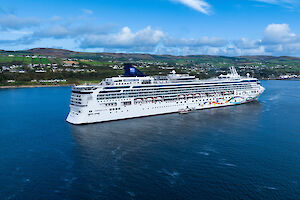
A major milestone was reached as Nieuw Statendam became the largest cruise ship ever to visit Lough Foyle, marking a landmark moment for Foyle Port and the wider North West region. At just under 100,000 gross tonnes and measuring 300 metres in length, the vessel operated by Holland America Line brings its highest ever single day volume of passengers and crew to the destination, underscoring the region’s growing appeal to major international cruise operators. The Nieuw Statendam, capable of accommodating up to 2,666 guests and 1,053 crew, called to Lough Foyle as part of Holland America Line's 28-day "Arctic Circle & British Isles Collectors' Voyage" — an itinerary that places the North West firmly alongside some of the most sought-after destinations in the region. This latest call marks Holland America Line's first return to Lough Foyle since the Prinsendam visited in 2018, and the operator has already confirmed scheduled return visits in 2027, 2028 and 2029. To commemorate the inaugural call, a traditional plaque exchange was held on board between the ship’s Captain and local representatives from Foyle Port. Foyle Port’s Harbour Master and Operations Director, Captain Bill McCann said: “Welcoming the Nieuw Statendam — the largest cruise ship ever to call to Lough Foyle — is a landmark moment for Foyle Port and for the wider North West region, and a reflection of the significant work that has gone into developing this destination for major international operators. “Bringing close to 3,700 passengers and crew to the region in a single visit is a record for us, and the fact that Holland America Line has already committed to returning for the next three years tells its own story about the confidence that leading cruise lines now have in our Port facilities and local tourism offering. “The North West has a great deal to showcase, and we look forward to welcoming many more vessels of this calibre in the years ahead." Karen Farndell, associate vice president for sales and marketing for Holland America Line, Operator of Nieuw Statendam, said: “Calling at Foyle Port offers a wonderful opportunity for our guests to experience the history, culture, and landscapes that make Northern Ireland so special. “We are committed to connecting guests more deeply with the destinations we visit, while caring for the local communities and natural environments that make these journeys so meaningful”. Driving the demand for visitors to the region is also its leading tourism offering, with passengers from Nieuw Statendam able to access to a range of shore excursions across the North West, taking in the region's Areas of Outstanding Natural Beauty, museums, and more. New to this season's offering is Celtic Grá, a live production of Celtic music and dance which has been performed to audiences worldwide on land and at sea. Niamh McCarthy, Managing Director, Excursions Ireland, said: “The Foyle region is a shining example of what can be achieved when a remarkable destination is supported by a truly progressive Port. Rich in history, surrounded by stunning scenery, and packed with diverse experiences, it continues to grow as a must-visit cruise destination. “Working alongside Foyle Port is always a pleasure for us in Excursions Ireland – their proactive, innovative approach and commitment to partnership make them a driving force for the region’s success. 2026 is a busy season in Foyle Port and we look forward to being a part of the impressive growth this region is seeing.”
Saaremaa Harbour celebrates its 20th anniversary with Fred. Olsen Cruise Lines’ Balmoral
By Saarema
Uncategorised
05/06/2026
Saaremaa Harbour celebrates its 20th anniversary with Fred. Olsen Cruise Lines’ Balmoral
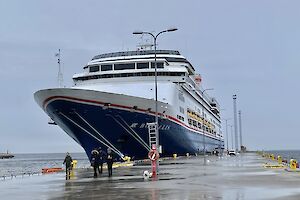
Port of Tallinn celebrated the 20th anniversary of Saaremaa Harbour on 3 June, marking two decades since the opening of Estonia’s dedicated cruise harbour on the island of Saaremaa. The anniversary was celebrated together with Fred. Olsen Cruise Lines’ Balmoral, which arrived in Saaremaa from Tallinn with 1,157 cruise guests on board before continuing her voyage to Riga. The call was especially symbolic, as Fred. Olsen Cruise Lines has been part of Saaremaa Harbour’s story from the very beginning. In 2003, when the decision was made to build a cruise port on Estonia’s largest island, Mr Nigel Lingard, former Marketing Director of Fred. Olsen Cruise Lines, made the first booking for a call to the future Saaremaa Harbour. Welcoming Balmoral at the pier for the harbour’s 20th anniversary therefore carried special historical meaning for Port of Tallinn and the Saaremaa cruise community. “We are very grateful to the Fred. Olsen Cruise Lines team and the crew of Balmoral for celebrating this special occasion with us. Having Balmoral alongside was truly meaningful — both for the historical connection and because she was such a beautiful sight at the pier,” said Sirle Arro, Head of Marketing and Communication at Port of Tallinn. A festive anniversary event was held at Saaremaa Harbour in the evening, bringing together cruise partners, local community members and visitors. The programme included performances by the well-known Estonian band Curly Strings, the Mustjala folk dance group Kuldking and special guests. To mark the occasion, an oak tree was planted at the harbour, referring to the harbour’s historical name, Tamme Harbour. Saaremaa Harbour was officially opened on 16 June 2006 on the shores of Küdema Bay. The harbour was designed and built specifically to serve cruise ships, making it a unique cruise port in the region. Over the past 20 years, Saaremaa Harbour has welcomed 126 cruise ship calls and 55,500 cruise guests. The 2026 cruise season is expected to be one of the harbour’s most active so far, with 11 cruise calls and more than 7,000 cruise passengers expected. The season began on 4 May with a call by Hamburg, which also returned to Saaremaa on 30 May. Balmoral will visit Saaremaa again on 26 July. Other calls this season include ships from Phoenix Reisen, including Amadea and Deutschland, as well as Ponant’s Le Champlain, which will call Saaremaa four times and close the season on 20 August. Tallink’s Victoria I will bring the largest number of guests to Saaremaa this season as part of a special opera cruise for the Finnish market on 22 July. As a cruise destination, Saaremaa offers guests an authentic and distinctive experience in the Baltic Sea region. Estonia’s largest island is known for its untouched nature, peaceful landscapes, rich cultural heritage, historic villages, local traditions and warm hospitality. For cruise guests sailing in the Baltic Sea, Saaremaa provides an opportunity to discover Estonia from a different perspective — beyond the capital and closer to island life, nature and local culture. Port of Tallinn extends its sincere thanks to Fred. Olsen Cruise Lines, the crew of Balmoral, local partners, Visit Saaremaa and everyone who has contributed to developing Saaremaa as a unique cruise destination. Port of Tallinn looks forward to continued cooperation with cruise lines and partners, and to welcoming cruise ships to both Tallinn and Saaremaa for many years to come.
Cruise Europe conference 2026 takes place in Reykjavik
By Cruise Europe
Industry
03/06/2026
Cruise Europe conference 2026 takes place in Reykjavik
Taking place in the stunning HARPA concert hall and conference centre located on the harbour, the Cruise Europe conference (CEC) took on a new level of participation and subject matter. Each year is the best yet! In over three decades of working in this industry, it was a privilege to discover that our conference director was Katrin Jakobsdottir, the former prime minister of Iceland. With great humour and efficiency she kept the timetable on track, interjected with some of her own valuable insights and questions, and ensured the delegates were engaged from start to finish. Conference hosts, Ports of Faxafloi, ably assisted in this by introducing an online facility, www.slido.com, whereby questions could be posed to the panels. These came thick and fast, perhaps giving an opportunity for those to speak up who may not always feel comfortable in taking the mic. It also added a certain speed element to proceedings. With more than 200 port and associate members in attendance, this was the most well-attended conference to date, despite the fact that reaching Iceland from some destinations involved three-plus flights. Jens Skrede, managing director of Cruise Europe (CE), who was clearly delighted with the proceedings, and rightly so, said: “Working with our hosts, Ports of Faxafloi, has been a joy. One of my takeaways is that of Icelandic girlpower. From Katrin as moderator to Tinna Johansdottir [from the port] working tirelessly both back and front of house, to Edda and Kaja at Iceland Innovation Week, what they have delivered has been second to none.”
CE chair officially opens the conference
By Cruise Europe
Industry
03/06/2026
CE chair officially opens the conference
Cruise Europe chair, Simone Maraschi, spoke with eloquence about the industry that brings us together. His opening remarks began with highlighting Iceland as a metaphor for the cruise business. “Volcanic, resilient, remote, and yet, connected to the world. A place where the forces of nature remind us, daily, that we are part of something much larger.” He went on to highlight the all-time high the industry is experiencing: that this is not a recovering industry but a thriving industry. Describing Northern Europe as, not a secondary chapter in the global cruise story but a defining one, he said: “This is the region of the fjords, the Arctic light, the medieval Baltic capitals, the wild Atlantic coastlines, the islands that sit at the edge of the known world, like the one we are standing on right now. “These are not interchangeable destinations. They are irreplaceable ones. And that distinction matters enormously in a market where travellers are increasingly looking for authenticity, depth, and experiences they cannot find anywhere else. “The luxury and expedition segments - the fastest growing in our industry - are disproportionately drawn to what Northern Europe offers. Smaller ships. Remote ports. Extraordinary nature. That is our competitive advantage, and it is growing. “And the shoulder season work is paying off. What was once a short, compressed summer window is becoming a genuine year-round proposition. Not despite our climate and our geography, but because of it. Different in every season, extraordinary in all of them. “This is our territory. And we should own that narrative with confidence.” He spoke about the need for resilience in a changed world, an example of which has been how the Baltic members have adapted itinerary offerings in response to shifting geopolitical realities which are uninvited and of which we have no control. Maraschi highlighted a number of challenges which were discussed later in the panel sessions, saying: “We operate in a world where regulatory timelines are accelerating, where new taxes and fees are being introduced across our destinations - some thoughtfully, some less so - and where itinerary decisions are shaped by factors we cannot always predict or control. This is the environment. We don’t get to choose it. We have to operate in it, and we have to do so together.” Collaboration and cooperation were themes that ran through the day, not least when it comes to passenger fees and cruise tax as he explained: “We do not oppose the legitimate needs of governments and communities. We ask for predictability, proportionality, and the willingness to listen. We will always bring the data. We will always bring the economic argument. But we also need to bring the relationship, and that is built over time, in conversations exactly like the ones we will have today.” Cruise Europe is made up of 130 ports and destinations from Lisbon to the North Cape representing different countries, languages and political systems but “working on the same problems, sharing the knowledge, speaking - when it matters - with one voice. In a world that struggles to cooperate, we do cooperate … but it comes with a responsibility. Every one of us in this room … we are not just doing a job. We are ambassadors. Of our ports, yes. Of our regions, of course. But also a set of principles. Friendship. Collaboration. Mutual respect.” Having spent almost three decades in the industry, it is clear that Maraschi is passionate about it and the people who work in it and the increasing need to build and develop partnerships drive the business forward successfully. “This industry runs on relationships. And what Cruise Europe has built - across 130 ports, through every disruption, every transformation - is something rare. A genuine community. Where competitors collaborate. Where the large support the small. Where a handshake becomes a partnership and a conversation becomes a friendship. “And to our friends from the cruiselines - you are not guests in this room. You are part of this community. Your decisions shape the future of every port in this association. We truly value our partnership.”
Wybcke Meier delivers the opening address
By Cruise Europe
Sustainability
03/06/2026
Wybcke Meier delivers the opening address
Growing up on the small island of Helgoland (1,500 population and 3,000 daily visitors from May to October) was where CEO of TUI Cruises, Wybcke Meier, learnt very early on “that connection matters, that supply chains matter, that seasons matter and that tourism is not an abstract concept, it directly shapes the life of the community”. It is also a place, like so many CE destinations, where opportunities and limitations exist side by side and finding the right balance is key to everyone’s success. While “cruising is thriving”, it still represents less than three percent of global tourism. With long-term and predictable growth, there is an opportunity to expand in a sustainable way but growth also brings expectations from destinations, communities, policymakers and travellers. “We see increasing scrutiny. And in some places, resistance which leads to a simple truth. Evolution is great, it is successful when it is actively shaped” which has happened in the past 20 years when the global volume of cruise passengers tripled. Joint action is the key and the cruise industry’s capability to adapt is not in question. Meier said: “I believe our future here in Europe is bright – as a source market, as a destination, and again the numbers speak for themselves, Europe is popular, the non-Med part showed stronger growth.” TUI Cruises itself deploys 70 percent of the capacity in Europe, 20 percent in the Med and almost 50 percent in the Northern region. But, she said, that joint success depends on: collaboration and co-creation; and measuring value, not just volume. For the latter, she pointed out that “it was never so easy to make use of all the data and share it, make it visible” because “where facts are missing, perception fills the gap”. The fact that “there is no one cruise, no standard ship, no standard guests and no standard destination” is the reason why, she said, “our products onboard and shoreside must be designed together”. Adding that every passenger wants to have an individual shoreside experience whatever category of ship they travel on: “There is a clear demand, and we can actively shape demand and create the best experiences.” This means, for example, guiding guest flows, reducing pressure on hotspots or opening new destinations. “Cruising does not just react to tourism flows. We can actively steer them,” she said. Planning long-term and providing data well in advance can allow: smarter infrastructure and better joint use of resources; better visitor distribution and stronger destination management. “Data is not just operational, it is a governance tool. And this will help us to unlock new potential destinations and expand seasons”. Meier concluded with a KPI call. “Visibility and transparency are key. And a shared understanding of value is of essence. As an industry we should agree on one common KPI framework that makes the value of cruise tourism in destinations clearly visible … “Because only when value is visible, can we move the conversation from: perception to facts: debate to partnership; acceptance to long-term success. This is not new. It is not complicated. So let’s not wait for playbooks. Let’s write them - together for the best customer experience onboard and shoreside.”
Global economic impact study, results from Europe
By Cruise Europe
Industry
03/06/2026
Global economic impact study, results from Europe
Nikos Mertzanidis, executive director of CLIA Europe, rattled his way through 31 slides in his 10-minute slot which can be found in more depth on the association’s website under Research on the Resources dropdown menu. One of the interesting takeaways was that the projected fleet by the end of 2039 will be split almost equally into three ship-size categories: 33.6 percent up to 1,000 lower berths; 34.5 percent 1,000 to 3,000; and 31.8% 3,000-plus. That the eight ships being delivered to CLIA member cruiselines this year represent 20,561 lower berths, ranging from Emerald Cruises’ Emerald Kaia (128 lbs/$115 million/€99 million) to Royal Caribbean’s Legend of the Seas (5610 lbs/$2.2 billion). Results from a survey show that 89.7 percent of those who have cruised will cruise again and that 75.6 percent are open to taking a first cruise. In terms of those taking a shore excursion, not surprisingly uptake is greater within the older generations but that on average 70 percent went on a shore excursion. And a helpful fact for destinations facing criticism from, for example hotels, six out of 10 cruisers return to destinations first visited via a cruise. In 2025, 37.3 million took a cruises, up 7.7 percent on 2024. Of these 8.9 million were from Europe, up 5.3 percent. The top three source markets for non-Med Europe were Germany (45.7 percent), UK & Ireland (30.4 percent) and USA (9.6 percentOf the global economic output of $198.8 billion, Europe accounted for 35 percent and the US 38 percent. Global average per passenger spend in 2024 was $322 on turnaround and $89 on transit calls.
Itinerary planning in the CE area
By Cruise Europe
Industry
03/06/2026
Itinerary planning in the CE area
This session, moderated by Captain Steven Young, got off to a cracking start with Nicolai Skogland, director itinerary planning & government relations, Viking Cruises, saying that he had “no issue with port fees as long as they are predictable and reasonable” but that “introducing strange taxes on a short time line is more aggravating and dangerous to some destinations more than others”. Mertzanidis also made reference to this during his talk: “North Europeans budget for holidays and they do not like surprises so sudden increases in varied fees which are not communicated well in advance are a problem.” As a brand Princess Cruises has forecasts and needs to plan ahead as Debbie Holbrook, director deployment & itinerary planning at Princess Cruises which announced its largest North European programme ever for 2028 this Tuesday, pointed out. She also highlighted the value of fam trips, saying that a recent Irish fam trip had given rise directly to a Princess itinerary. Skogland added that Viking actively seeks out new and diverse ports and, with it bringing its first Chinese guests to Northern Europe, it is looking for something different. Marcus Puttich, director destinations at TUI Cruises, mentioned seasonal deployment opportunities but advised that customers in the shoulder and winter seasons can be different from those in the summer which would require extending the product. He mentioned that Christmas markets are very popular amongst TUI guests. He added that reliability, guest experience and partnership become even more important during the poorer weather months. From the destination side, Emma Kjartansdottir, CEO cruise services at Iceland Travel which tries to include as many local people as possible in cruise calls, is keen to see an extended season. This could lessen the burden on ports and destinations during the nine extremely summer weeks. Importantly, she added: “It would also help shift attitudes. One of the criticisms is that cruise has not been part of the extended seasonality.” Skogland was in no doubt that Viking wants to sail year round in Northern Europe. Chris Allen, VP deployment & itinerary planning, Royal Caribbean Group, started by saying what a delight it was to have the new terminal coming on line in Reykjavik and that Celebrity Cruises had eight turns this year. He was not alone in commenting on the “fantastic airlift” to/from Iceland which is a great contributor to round Iceland itineraries. He suggested that flexible port fees and taxes could be influential in driving seasonal deployment interest. He went on to explain that itineraries are being planned up to five years out which may then need to be changed nearer the time due to, for example, geopolitical reasons. “It is very important to have good communication. We are nimble but we have to rely on destinations to help us as well.”
What ports need from cruiselines and vice versa
By Cruise Europe
Industry
03/06/2026
What ports need from cruiselines and vice versa
Transparency was the word that kept on emerging from these discussions. Alongside collaboration on the ground and with the cruiselines. Chris Martin, director marine & port operations at Holland America Group, started by saying: “The worst thing is to be surprised coming into port, for example, there are not enough buses to get the guests out. Keep us informed, involve us in discussions, for example, on port tariffs and infrastructure plans.” With ship and passenger numbers coming to market growing, there will be capacity constraints in some places, looking at value versus volume could be beneficial. Martin said: “Be realistic about what your port/destination can handle. We see a big increase in port costs in the European sector. We need help to try and address that. Work with us. We want to keep coming but it is getting costly.” On the nutty subject of bookings, there was almost unanimous agreement about getting booking confirmations that are set in stone well in advance. Michael Braathen, director itinerary planning, port operations and land programmes at Mystic Cruises, referenced Iceland’s booking system DOKK (which was later explained in more detail), saying: “If everyone had that it would be very helpful.” He is also a great advocate of first come first served. Costs came up again when it comes to onshore power supply and taxes. Braathen highlighted that the cost of plugging in is about three times the cost of using the ship’s own power which effects the ticket price. Martin added: “We are seeing costs going up considerably and a lot of variable rates. It is cheaper on our own engines. Open dialogue is important”. Gary Hall, chief commercial officer at the Port of Belfast which has invested €90 million in the port and cruise tourism over the years, added: “The biggest requirement is to create a collaborative open approach between the port and cruiselines on challenges, developments and requirements. One of the biggest challenges is around berth allocations, advance bookings, for example we have them coming through now for 2031/32.” He acknowledged the “pain point” when a later booking comes in for the same which would bring in more revenue but highlighted “the need to be able to satisfy the customer [who had booked already]”.
Beyond the port: rethinking shore excursions for today’s traveller
By Cruise Europe
Sustainability
03/06/2026
Beyond the port: rethinking shore excursions for today’s traveller
Cooperating with local communities and suppliers to create new products and services is becoming more important as guests show an increasing interest in maximising the experience and, also, in activities and venues that are less frequented, explained Susanna Capaccio, manager destination experiences at Silversea Cruises. Anticipating trends and finding answers to provide different experiences for different travellers is on the agenda of Maria Tauschke, head of shore operations at TUI Cruises. One of those trends is that of independents booking shore excursions for themselves, which is a topic that is gaining traction. “How do we communicate our added value for guests to book shorex with us,” she asked. While Abigail Crossley, director strategic sourcing at Carnival Corp UK, said that ratings drawn from guest feedback forms show that: “Guests who take excursions tend to rate a destination more highly than those who choose to explore independently.” “Guests have more choice than ever before and we have to meet those challenges and deliver something for them. We need clear messaging and to be positive about why they should come with us,” she added. Which is when Amanda Kordt, director shore excursions, European Cruise Services, mentioned that one solution could be for cruiselines to lower their markup on tours. She also mentioned the need for variety and the need to keep being dynamic as, for example, “middle-class is not necessarily that person any more compared to five/10 years ago”. For Silversea, Carpaccio explained that the challenge is more about the lack of infrastructure (buses/guides etc) than it is about costs. “The solution is to have constant communication with all the stakeholders to find solutions,” she said, while adding: “As demand grows it is important to maintain a standard of quality.” There was some discussion about the use of AI whereby Tauschke explained that TUI was conducting a test pilot on board Mein Schiff 2. Moderator Niamh McCarthy, ceo Excursions Ireland, concluded: “Whilst we are in a world that is changing, the human interaction has to be at the core of the excursion. We have to find that blend”.
Community value: from port to city
By Cruise Europe
Sustainability
03/06/2026
Community value: from port to city
Eva Britt Kornfeldt, manager Oslo Cruise Partners and Svalbard Cruise Forum (SCF), shared some of her experiences on this subject. In particular she mentioned the SCF, which was established in 2023, and puts its efforts into shared responsibility and continuous dialogue with stakeholders. She also mentioned that a pre-season mandatory meeting of the 150 participants is held for those visiting Svalbard about eco-sensitivity and mandatory rules of engagement. Melanie Lewis, director shore excursions & product development at Holland America Group, shares some top tips about what is gaining traction in terms of excursions: meet the makers; community connections/social sustainability; and urban explorer, for example sharing a day with a local. At MSC Cruises, manager community engagement and sustainability, Jon Olav Stedje, highlighted the importance of making sure there is dialogue between the cruiseline and the destination but also in the port/destination itself. He made a request: “We need to have a proactive approach and help where it is needed. Bookings are made so far ahead, so use the time wisely to make it the best you can. We are here to help”. Ceo of Visit Reykjavik, Inga Hlin Palsdottir confirmed that the cruise industry can be unfairly targeted and was keen to highlight the need to “build bridges by having meetings so that everyone can see what is happening”, adding that supplying data and being seen as part of the visitor community, not separately, is important in this respect. She also made the valid point that: “The satisfaction rate of the residents is also important.” Stedje concluded: “There are a lot of false perceptions about our industry. Once again, this goes back to communication in the industry and in the destination to be able to [provide] answers.”
Three sessions, three topics … increasing understanding
By Cruise Europe
Sustainability
03/06/2026
Three sessions, three topics … increasing understanding
***A morning session on ‘Small ships, different stories: understanding expedition cruising’, moderated by Liz Gammon, Seatrade expedition ambassador, explored the difference between expedition and small ships. Hugues Lamy, director port operations at Swan Hellenic, perhaps solved this riddle with an expedition ship being self-sufficient and able to call anywhere. He went on to say that new destinations can test the industry with expedition ships and see how it goes before accepting small ships. While Kelly Hubbard, director & product development at Windstar Cruises, said: “We need different experiences in the summer and winter and we need more infrastructure in the small ports”, for example making sure attractions, shops etc, are open when a ship comes in. Something as simple as local guides greeting the passengers with their own stories is very welcome. Even here there was a request for confirmed bookings. She said: “I don’t love the message of ‘bumping’ if you get a bigger ship booking. If you say it is confirmed, please keep it confirmed.” Lamy added: “It is better to tell us that a big ship is coming in at the same time than not being able to give us the services we need.” ***Ana Lourenco, cruise manager Port of Lisbon & chair of the CE sustainability group, opened a session on the important subject: ‘The cost of decarbonisation: Who pays and how we stay competitive”. Both Michele Franchioni, chief energy transition officer, MSC Cruises, and Ingvar Mathisen, ceo at the Port of Oslo, discussed the high cost element of connecting and also of installing onshore power supply (OPS). In explaining that MSC Cruises connects where possible, it being an “effective way of reducing local pollution”, he said: “We experience significant high costs of connection depending on the type of port, the ships and the fuel. We can have costs 100 percent higher than running on our own fuel. We need to work together to mitigate the costs.” He also mentioned the technical challenges involved, such as black-outs and incompatibility between the ship and port in some places. In terms of costs, Franchioni explained that the port pays for the shoreside infrastructure and the cruiseline that of the vessels but he said: “Long-term contracts between the line and port should help”. Mathisen pointed out that: “It is crucial to get funding as the investment is significant”. In terms of future regulations making OPS mandatory, he said: “As ports we have to be efficient re use of the grid. We also have to incentivise cruiselines to use it, for example via EPI.” He was keen to add that there has been less negativity about cruiseships from the Oslo community since the arrival of OPS connections. Franchioni concluded: “If we are united in talking to government, we will find some solutions. We must work together.” ***Jakobsdottir introduced the session on ‘EU regulations and their impact on the cruise & port industry’. What can be a somewhat dry subject was certainly given a boost by herself together with Sandra Weir, VP government relations & public affairs, NCL Holdings, and Alessandro Carollo, AVP government relations at Royal Caribbean Group. Carollo kicked off with the EES which is now up and running after a soft launch last year. He made the point that normal disembarkation of a large ship can take anything between three and 10 hours and that it is up to the ports to put on more desks and more staff where necessary. “We have known [this was coming] since 2017 so you could have been prepared,” he pointed out. Costs again came to fore. Sudden increases in port costs, taxes and restrictions coming in after calls have been announced 18-24 months ahead cause problems for cruiselines as, due to regulation, after tickets have been sold to passengers, these cannot be passed on. “We need destinations within themselves to agree a cruise strategy and then come to us with problems to work on rather than we finding, with short notice, that there is, for example, an extra tax”. Weir pointed out that, OPS aside: “We need fuels for when we are at sea. We need EU money to go into port infrastructure re storing fuels in port.” In general, she added that whatever the challenge: “It is all about open and honest dialogue. We can come up with better solutions together for regulations that can be advantageous for both parties.”
Turning ideas into action
By Cruise Europe
Sustainability
03/06/2026
Turning ideas into action
Following last year’s successful Cruise Europe workshop, The Cruise Europe Lab, led by Luis de Carvalho and Louise Landler of Copenhagen Malmo Port (CMP), filled the final spot of the day ensuring a lively interactive session whereby all could participate. There were about 250 participants in the workshop divided into five groups of a total of 20 tables. Each were given a different initiative on which to focus, define and suggest solutions to any challenges. Each was adjudicated by a cruiseline executive who summarised the findings at the end of the proceedings. Initiative 1, Cruise & community value: strengthening local value and transparency, was led by Jonathan Hawkings from Royal Caribbean. Initiative 2, Winter cruise readiness: unlocking year-round cruise potential, saw Marie Blitza of Carnival Maritime at the helm. Initiative 3, When plans change: improving cruise disruption coordination, had Odette McFarlane of Carnival UK listening in. Initiative 4, Evolving guest behaviour: rethinking the cruise experience & revenue model, was overseen by Robert de Bruin of Holland America Line. Initiative 5: Managing guest flows: from congestion to coordination, had Kyle Dunst from Princess Cruises to thank for his input. The room was abuzz with discussion for what is a valuable source of innovative thinking towards future strategies. De Carvalho and Landler are in the process of collecting and assembling the conclusions of all tables into a report/key takeaways document that will be shared will all participants in the next weeks.
Kicking back and networking events
By Cruise Europe
Industry
03/06/2026
Kicking back and networking events
Hosts Ports of Faxafloi went above and beyond in entertaining its guests during the conference. From the VIP tour to Thingvellir National Park and seat of the oldest democratic parliament in the world, Eyrarbakki and Grindavik, led by Gudni Th Johannessen, former president of Iceland, to the gala dinner and entertainment from Vigdis Haflioadottir and Egill Andrason at Gamla Bio, we were given a flavour of the country’s food, culture, humour and music. With the official opening of the Vor, Reykjavik Cruise Terminal, taking place on Friday May 29, we were give a sneak peak at the informal dinner on the Wednesday night. For some the boat trip over was accompanied by songs from none other than ‘Muggi’, Gudmundur Magnus Kristjansson, former port director of Isafjordur, a well-known member and stage presence on the CE circuit. Managing director of CE, Jens Skrede, also made an appearance with the song “One Frank in Iceland”! Further music from DJ Hermigervill ensued which had the regulars up on the dance floor early on in the proceedings while many were enjoying the exceptional buffet and views. Tolt at The Edition provided a welcome place to take a break between the day and the evening and a chance to establish and renew friendships after a day’s work.
CEC 2027 goes to Bergen
By Cruise Europe
Industry
03/06/2026
CEC 2027 goes to Bergen
As Iceland passes the baton to Norway, please mark your calendars for the next Cruise Europe conference which will take place in Bergen. Bergen is the second largest city in Norway and, with a population of about 295,000, is twice the size of Reykjavik, just to give you some idea of scale. Rich in maritime history, known for its colourful waterfront, and with surrounding mountains, Bergen is no stranger to the challenges that can be faced and overcome when it comes to the cruise industry. CEC 2027 promises to be another show stopping event.
Rouen targets higher cruise yield with new focus on after-excursion spend
By Rouen
Uncategorised
27/05/2026
Rouen targets higher cruise yield with new focus on after-excursion spend
Rouen is sharpening its cruise strategy around one commercial priority: capturing more value from the hours after the morning excursion. With around 110,000 river and ocean cruise passengers a year, the destination is now positioning itself not just as a scenic Seine stop, but as a place where cruise calls can generate more passenger spend, stronger satisfaction, and better itinerary value. The city's 2026 cultural calendar adds momentum to that shift. Cathédrale de Lumière, Festival Normandie Impressionniste, and the exposition, Sous la pluie: peindre, vivre et rêver, create a stronger reason for cruise lines to build Rouen into premium shore excursions and potentially longer calls. For operators, that means a destination with more commercial depth: - Heritage - Culture - Gastronomy - Evening appeal in one compact city Rouen's appeal is reinforced by time-specific experiences such as the premium organ concerts at the Abbatiale Saint-Ouen, which add an exclusive layer to the city's cultural offer. Rouen's advantage is that it can deliver a rich visitor experience without requiring a complex operating model. The historic center is walkable, the cultural offer is strong, and the city is increasingly aligned with the kind of high-value passenger experience cruise lines are seeking. That makes Rouen especially relevant for lines looking to differentiate Seine itineraries and increase onshore yield. The city's wider international strategy is focused on turning visits into stays, and that logic now extends naturally to cruise. For cruise operators, Rouen offers a clear opportunity: use a high-quality destination to improve the guest experience, while unlocking more value from time already spent in port.
Greg Mortimer marks Honfleur’s first maiden call of the 2026 season
By
Industry
07/05/2026
Greg Mortimer marks Honfleur’s first maiden call of the 2026 season
Honfleur was delighted to welcome the Greg Mortimer, operated by Aurora Expeditions, marking the destination’s first maiden call of the 2026 cruise season. Recognised worldwide for its expertise in Arctic and Antarctic expedition cruises, Aurora Expeditions is now expanding its presence across Europe, representing a significant milestone in the company’s development strategy. The arrival of Greg Mortimer in Honfleur reflects the growing interest of expedition and boutique cruise operators in authentic European destinations with strong cultural identity and premium visitor experiences. After a previous stop in Saint-Malo, Honfleur was the vessel’s final French port of call on this itinerary before continuing onward to Belgium. This strategic stopover further strengthens Honfleur’s position within Northern European cruise itineraries and underlines the destination’s growing attractiveness among niche and high-value cruise operators. The call of Greg Mortimer also highlights Honfleur’s ability to welcome smaller-scale expedition vessels seeking ports of character, authenticity and close proximity to exceptional cultural and natural heritage. With its preserved historic centre, renowned artistic heritage and privileged location in Normandy, Honfleur continues to consolidate its reputation as a distinctive cruise destination on the European market.
Lisbon is the first port to welcome the world’s largest sailing ship, the Orient Express Corinthian
By Lisbon
Sustainability
06/05/2026
Lisbon is the first port to welcome the world’s largest sailing ship, the Orient Express Corinthian
Lisbon is the first port to welcome the world’s largest sailing ship, the Orient Express Corinthian The Port of Lisbon welcomed, on 6 May 2026, the inaugural call of the Orient Express Corinthian, the largest sailing ship in the world, arriving in the Portuguese capital on its first official voyage, which began in Saint‑Nazaire and will conclude in Marseille. According to the Port of Lisbon Authority, “the choice of Lisbon for the inaugural call of the Orient Express Corinthian demonstrates the international recognition of the quality of our infrastructure and the excellence of our port operations.” The port authority further highlights that “this call reinforces Lisbon’s position as a leading port in the Atlantic and confirms the city’s attractiveness for high‑prestige operations. Corinthian is a remarkable example of technological innovation and environmental responsibility, values that also guide the Port of Lisbon’s strategy”. To mark the occasion, the Port of Lisbon presented the captain with the traditional inaugural call plaque, and the vessel will be escorted by Portugs tugboats, symbolically underscoring the importance of this operation for both the port and the city. SolidSail Technology: Innovation in the Service of Sustainability The Corinthian is equipped with three 100‑metre masts and SolidSail technology, a rigid composite sail system that combines wind propulsion with LNG (liquefied natural gas). This innovative solution provides greater aerodynamic efficiency, tilting masts (AeolDrive system) that facilitate manoeuvring and adaptation to adverse conditions, as well as a significant reduction in fuel consumption and carbon emissions. With this hybrid propulsion system, the Orient Express Corinthian stands as one of the largest cruise ships in the world operating with wind‑assisted propulsion, setting new standards in maritime sustainability. A Masterpiece of Engineering and Contemporary Luxury Built at the Chantiers de l’Atlantique shipyard in Saint‑Nazaire (France), the vessel was developed by the Accor Group in partnership with LVMH and is the first unit of the new ultra‑luxury Silenseas fleet. It inaugurates a new era in luxury sailing, where elegance, cutting‑edge engineering and sustainability converge. With 220 metres in length, 26,600 GT, 54 exclusive suites, and capacity for around 110 guests, the Orient Express Corinthian has been conceived as a true “floating palace”.
Le Havre welcomes Majestic Princess on inaugural call during first dual operation at new cruise terminals
By Le Havre
Industry
30/04/2026
Le Havre welcomes Majestic Princess on inaugural call during first dual operation at new cruise terminals
On 16 April, Le Havre’s cruise terminals marked a key operational milestone with the first dual call at Le Havre Verrazzano Cruise Terminal. On this occasion, Majestic Princess, operated by Princess Cruises, made her inaugural call to Le Havre, marking an important milestone for the 2026 season, with 7 new vessels scheduled. This simultaneous operation alongside Nieuw Statendam from Holland America Line clearly illustrates the growing capacity of Le Havre’s cruise infrastructure. The new terminals enable the simultaneous handling of multiple vessels, demonstrating the operational capability of these facilities. As highlighted by Alexandra Ruiz, Managing Director of Le Havre Croisières: “This inaugural call of Majestic Princess, during a dual operation at our new cruise terminals, marks an important milestone for Le Havre. It reflects the strong confidence of international cruise lines and the step-change in scale of our infrastructure, now fully operational. These new facilities significantly enhance the competitiveness of Le Havre and the Normandy region on the global cruise market, while reinforcing their attractiveness among leading cruise operators.” Official welcome ceremony on board Majestic Princess A traditional plaque exchange ceremony was held on board, bringing together key institutional and port stakeholders. Caroline Leclercq, Deputy Mayor of Le Havre in charge of culture and international relations, Nicolas Chervy Harbour Master representing HAROPA PORT, Laëtitia Ziane coordinator for Seamen’s Club, and Cécilia Hesseron for Le Havre Croisières, operator of the terminal, were warmly welcomed on board by Captain Giuseppe Castellano and his crew. Strong 2026 season ahead for Majestic Princess Sailing from Fort Lauderdale and now deployed on Northern Europe itineraries, Majestic Princess begins a busy season in Le Havre, with 13 scheduled calls through September. The vessel welcomed more than 3,300 passengers on this inaugural visit, the majority from the United States, alongside approximately 1,300 crew members, reinforcing Le Havre’s strategic role within international cruise itineraries across Northern Europe.
Dover becomes UK’s first net-zero port
By Cruise Europe
Sustainability
28/04/2026
Dover becomes UK’s first net-zero port
On April 14, the Port of Dover announced it had achieved its target of carbon net zero emissions (Scope 1 and 2) for 2025, five years ahead of any other UK port, and 25 years ahead of the UK government’s maritime target. Wendy Atkin-Smith, managing director of Viking UK which has 27 calls to Dover this year, commented: “We offer our congratulations to the Port of Dover for becoming the UK’s first net-zero port, particularly as they have achieved this before the target date. In line with the port’s efforts, as a global leader in experiential travel, we are very mindful of our responsibility to the environment ourselves. Like the Port of Dover, our long-term success depends on our ability to develop programmes that meet or exceed both the global regulatory frameworks and local regulations for each area we visit. From the beginning, our approach has focused on minimising impact through design and technology, including reducing fuel consumption.” The port’s emissions for Scope 1 and 2 have fallen by a huge 98.3% from 2007, with residual emissions being offset through a local regenerative farming scheme issued under the UK Carbon Code of Conduct. The Short Straits counts for eight percent of all UK maritime emissions, so this news is a significant step forward for the future of maritime decarbonisation. Doug Bannister, ceo Port of Dover, said: “We are proud to be celebrating this milestone moment, which has seen our carbon emissions reduce drastically from nearly 14,000 tonnes 18 years ago. We are not stopping here. We want Dover to be a global leader, putting the UK on the global stage as home to the world’s first high-volume Green Shipping Corridor here on the Short Straits. This sustainability drive is an essential part of our Port of Dover 2050 Masterplan, helping to protect the UK’s competitiveness and drive economic growth in an efficient and sustainable manner.” The port’s longer-term ambitions require strong partnerships with industry and government. Its Scope 1 and 2 achievements have, however, been accomplished through its own drive and determination to champion sustainable maritime trade and travel. Examples include: *Purchasing sustainably sourced HVO (hydrotreated vegetable oil) to operate machinery *Installing 1.5MW of on-site solar generation *General energy efficiency improvements, such as purchasing renewable electricity and using LED lighting and heating controls *Residual emissions being offset through an approved local regenerative farming scheme, which has produced carbon credits under the UK Carbon Code of Conduct The port also recently achieved recertification under the EcoPorts environmental management standard (PERS) for the fourth time, which is the only port-specific environmental management classification. Peter Wright, head of cruise at the port, said: “As a major homeporting and transit destination with passenger numbers growing, delivering our operations sustainably is vital to the continuing success of the Dover cruise business. “Beyond the port’s net zero achievement, we have implemented a range of other environmental initiatives, notably our longstanding Safety and Environment Awareness Award (SEA award) which in its ninth year, has championed improvements in waste management and CO2 emissions by cruiselines.”
IJmuiden celebrates 25 years of cruising
By Cruise Europe
Industry
28/04/2026
IJmuiden celebrates 25 years of cruising
On March 25, IJmuiden came together to celebrate 25 years aboard Ambassador Cruise Line’s Renaissance. As KVSA and colleagues from the Felison Cruise Terminal and Port of IJmuiden, joined service providers, as well as representatives of the boatmen, tug services, and the municipality, they were able to demonstrate just what a great cooperation between the ship and port can achieve. The first ship to call IJmuiden back in 2001 was Fred Olsen Cruise Lines’ Black Prince with the business growing gradually until 2012 with the opening of the Felison Cruise Terminal, a dedicated building for cruise passengers. This paved the way for regular calls from companies such as MSC Cruises, Costa and Holland America Line with 63 calls in 2019, a record at the time. While the corona pandemic brought a stop to calls, IJmuiden was one of a few ports where ships could go for crew changes, necessary resupply and maintenance calls. This year IJmuiden also celebrates its 750th call. Additionally, KVSA (Royal United Ship Agencies), the parent company behind the Felison Cruise Terminals, is celebrating its 150th anniversary. Moreover, a new record is expected for 2026 with 76 calls scheduled. Next year the port expects to reach another milestone, 100,000 passengers. The terminal’s location close to the open sea, means vessels can berth shortly after entering the port, hence reducing sailing time. At the same time, the terminal provides easy access to the Amsterdam Metropolitan Region. Excursion programmes typically include cities such as Amsterdam, Haarlem, Delft and Leiden. Visitors can also travel to well-known attractions including the Zaanse Schans and the Keukenhof gardens during the spring season. 
Rotterdam releases comprehensive study on economic impact and sustainability
By Cruise Europe
Sustainability
28/04/2026
Rotterdam releases comprehensive study on economic impact and sustainability
On March 30, a study examining how cruise activity translates into local and regional economic effects for Rotterdam - Rotterdam | Economic Impact & Sustainability of the Cruise Industry – was published. “Every other year a study is commissioned in support of our industry to exchange correct and referenced facts,” explains Nick Hoogeweij, general manager, Cruise Port Rotterdam. The 52-page study focuses on two main factors: expenditure by cruise guests and crew while ashore and the funds cruiselines spend locally. Additionally, it examines sustainability transitions in the cruise segment with a particular focus on ecological sustainability. The comprehensive report provides in depth analysis of both the above factors. Here we highlight a few key points. In 2025, cruise tourism generated significant economic effects across Europe: a total output of €62.1 billion, €28.9 billion in GDP, and approximately 455,000 jobs. Within this European context, the Netherlands ranked among the top ten beneficiary countries, with an estimated €1.01 billion in cruise-related output. In 2025 Rotterdam received 121 calls and almost 500,000 passengers. Assuming that 80% are transit day visitors spending €115 each and 20% are embark/disembark guests spending €250 each, direct passenger outlays would total around €71 million. In terms of crew, with 121 calls and an average of 1,000 crew members per call, with 35% taking shore leave and spending €50 per person, the crew's total spending was around €2.2–3.1 million, depending on the shore leave rate (35–50%). Onshore power (OPS) was activated at the Holland Amerika Kade on March 31 2025 with AIDAnova being the first cruiseship to plug in. Shore power is analysed as a near-term intervention with a significant local impact on air quality, noise, and greenhouse gas (GHG) reduction while at berth. This intervention is now supported by EU regulations (FuelEU Maritime and AFIR) and cost signals from the EU Emissions Trading System (EU ETS). The discussion of alternative fuels evaluates operational trials with advanced biofuels, the status of LNG (including methane slip risks), and Rotterdam’s growing infrastructure for methanol and preparations for ammonia.   The study argues that Rotterdam is a major driver advancing the development of OPS, focusing on the rapid deployment of shore power and the emerging portfolio of alternative marine fuels.
Bergen established a cruise network
By Cruise Europe
Sustainability
28/04/2026
Bergen established a cruise network
Bergen Cruise Network was launched in February 2026 and brings together key stakeholders across the local cruise value chain, including the Port of Bergen, shore excursion providers, transport companies, and attractions. The network was initiated by the Port of Bergen in cooperation with Visit Bergen, Bergen City Centre (Bergen Sentrum), the Municipality of Bergen, and Vestland County Council. Krysta Alexa Singh, managing director, Bergen Cruise Network and cruise destination manager, Port of Bergen, explains: “The network was established in response to a clear need for better coordination, improved information flow, and greater predictability for both the destination and cruiselines. As one of the world’s most sustainable ports and the largest cruise port in Norway, Bergen recognises the importance of a more collaborative approach to destination development.” The aim, she adds, is not to increase cruise volumes, but to strengthen quality, coordination, and local value creation. This includes improving communication and destination overview, supporting product development across stakeholders, enhancing passenger flow, and promoting a more sustainable approach to cruise tourism. Singh concludes: “The level of engagement has exceeded even my own ambitious expectations and clearly shows the commitment across our industry to strengthen collaboration and coordination. I’m genuinely excited about what we can build together.”
Tallinn: Estonian government minister attends Seatrade
By Cruise Europe
Industry
28/04/2026
Tallinn: Estonian government minister attends Seatrade
The cruise industry is important to Estonia as demonstrated by the attendance of Kristjan Truu, deputy minister, maritime affairs & water resources, Estonian Ministry of Climate, at Seatrade Global this April.   “For Estonia, the cruise industry has two main pillars. The first is Estonia as a cruise destination. Tallinn is already a popular and growing cruise destination in the Baltic Sea region, and we are pleased to welcome hundreds of thousands of cruise visitors each year. In the future, we would also like to see more opportunities for cruises to embark from Tallinn,  allowing  also Estonians to start their cruise journeys from home. “Second, the cruise industry is also important from a business perspective. Estonia is home to a number of shipbuilding and ship repair companies that have long worked with cruise lines, supplying products and services such as bathroom solutions, vessel services, and other specialised support,” explained Truu.   The maritime sector in Estonia is comparable in size to agriculture, accounting for about four percent of the economy. Looking ahead, ambitions are high, as Truu noted: “The goal is to go from four to eight percent in the next 10 to 15 years through cooperation between the private and public sectors.”   With respect to cruises, he commented that Estonians are used to taking mini cruises but he believes that there is a place for cruiselines to open up cabins on ships sailing out of Tallinn to the locals so they can experience the product.
Le Havre opens Verrazzano Cruise Terminal
By Cruise Europe
Sustainability
28/04/2026
Le Havre opens Verrazzano Cruise Terminal
The new Le Havre Verrazzano Cruise Terminal complex is due to be commissioned in autumn 2026, bringing together three modern terminals designed to welcome ships and passengers efficiently. Terminals 2 and 3 have been fully operational since 1 April 2026 and are already welcoming 2026 season cruise calls in excellent conditions. Delivered in February 2026, they entered service at the beginning of April, marking a key milestone in the phased commissioning of the new complex. Terminal 1 will complete the overall project upon its delivery later this year.” Alexandra Ruiz, chief executive officer of Le Havre Croisieres, comments: “The opening of the Le Havre Verrazzano cruise terminal represents a major milestone for our destination and for the French cruise industry. Thanks to these new facilities, Le Havre strengthens its position as a leading port of call and turnaround port in Northern Europe, combining operational excellence, passenger comfort, and a strong commitment to sustainable port development. ”   Terminal 1, the architectural centrepiece of the project, is located facing the city centre of Le Havre, a UNESCO World Heritage site. The 7,295m3 terminal area can service 4,500 passengers a day. The Roger Meunier Quay has a usable length of 380m, a depth of 10m and no air draught limit. It will have shore power by the end of 2026 and will be LNG-ready.   The phased terminals delivery marks the culmination of a major project initiated in 2019–2020 with preliminary studies. Following the launch of the tender process in July 2021 and the selection of the winning consortium in June 2022, construction work officially began in June 2024. A further important milestone was reached in October 2025 with the commissioning of shore power supply on the Quai Pierre Callet (Terminal 2).   Since the opening of Terminals 2 and 3, the new facilities have already welcomed a wide range of vessels, including AIDAsol, Ambition, Majestic Princess, Nieuw Statendam, MSC Virtuosa, Norwegian Sky, MSC Preziosa, AIDAperla and Sapphire Princess. These initial calls, including several double-call days as well as transit operations, partial turnarounds and full turnarounds, illustrate the operational flexibility and the immediate success of these new infrastructures. Despite the complexity of the construction site, the GIP Le Havre Croisieres, project lead, has managed to maintain cruise operations throughout the works, continuing to accommodate all scheduled calls at two berths.   In 2026, Le Havre is expecting 141 calls, compared with 137 in 2025, including 17 double calls, one triple call, six full turnarounds, as well as numerous partial turnaround operations. The season will also include six inaugural calls. The official inauguration date has not yet been announced, but it is expected to take place after the completion of Terminal 1 in autumn 2026.