Sustainability goes way beyond OPS

30/05/2024 | by Cruise Europe Press
Back to all news
When it comes to sustainability, senior director marine & port operations Holland America Line/Seabourn, Chris Martin is in no doubt that “we have to work together”.

On the subject of onshore power, while Marie Blitza, director port operations Carnival Maritime, emphasised the importance of its role in the Europe and with EU regulations, Martin said it is “key as a short and long-term solution.” However, he added what many will be relieved to hear: “You don’t have to invest in shore power to see our ships. It is not the only solution to help us with our efforts”.

Michal Forland, port director Port of Bergen, pointed out that 70 percent of cruiseships connected to OPS in Bergen in May. “This decrease in emissions needs to be put forward to the public in some way to take away the message of cruise being as bad as it used to be.” Martin responded: “We want to get the message out there. If there is anything we can do to support this we will.”

The topic of proactively promoting what the industry is doing in the face of criticism was then expanded on by Nikos Mertzanidis, vp ports & destinations & taxation Cruise Lines International Association (CLIA), in discussion with moderator Nigel Lingard: “I think the great challenge for all of us is how we share the facts confidently and lightly as an industry. If you look at lobbying enterprise, this means research, then input and then communication.”

Sourcing alternative fuels is on the rise with solutions so far being scarce. Blitza commented that there are “very limited ports that can provide alternative fuels,” but Martin advised that HAL is testing biofuel with the Port of Rotterdam.

The point was made a couple of times about the advantage cruise has over land-based tourism. Maria Tauschke, head of shore operations TUI Cruises, explained: “Cruise tourism is managed tourism.” Everyone knows when the ships are coming, how long they are staying and how many passengers there are. However she cautioned destinations not to take on too much: “Even if a port can handle six to seven ships, it may not be able to handle all the passengers.” This is another reason why cruise networks are vital to the success of a call for both the community and the passengers.

Martin made it clear that speaking up is good for everyone: “If you have concerns about capacities, the number of guests in port on a day, please discuss this with us so we can make it work for everybody.”
Cruise Europe Press
Cruise Europe Press
susanparkersp@gmail.com
Share on Facebook  :Share on LinkedIn  Share via Email
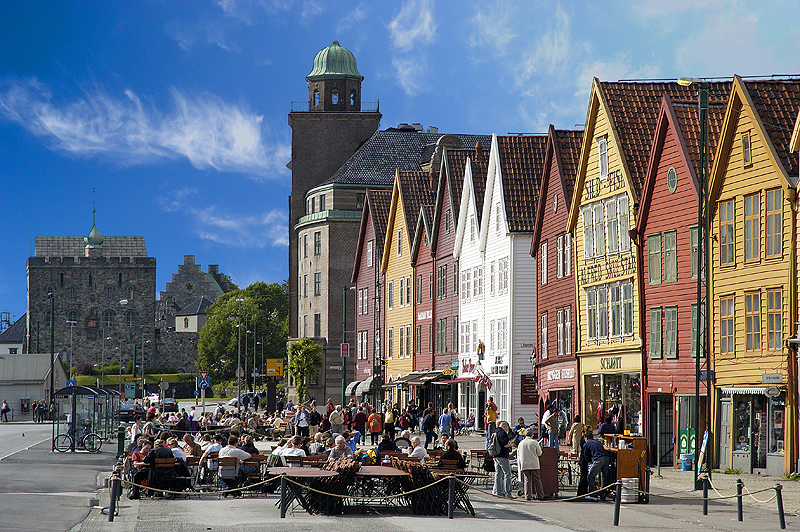
Bergen
BERGEN | Norway


Sustainability goes way beyond OPS
This could be of interest to you
The first CE at Sea is widely applauded
2|3|4
25/02/2026
The first CE at Sea is widely applauded
The first Cruise Europe at Sea has taken place and, by all accounts, it was a resounding success. Jens Skrede, managing director, said: “We are delighted to have been able to host this special event for our members and truly grateful to MSC Cruises for taking such good care of us.” The 110 members enjoyed a four-day passage on MSC Splendida where they participated in workshops and meetings with MSC Cruises and the management of Costa Crociere but also heard about the EU regulatory framework for protecting the cruise ecosystem from Nikos Mertzanidis, executive director Cruise Lines International Association (CLIA) Europe. Visiting Barcelona, Marseilles, Genoa and Naples also gave members insight into cruise operations as well as tourist attractions. Valerie Conan, cruise director, Greater Le Havre Tourist Office, said on LinkedIn: “This immersion has consolidated our partnerships and confirmed the importance of collective work and constant dialogue to support the evolution of the sector.” While Melanie Henderson, cruise & marketing manger, Lerwick Harbour, said: “Good quality time spent with Cruise Europe colleagues elevated the programme, strengthening connections and all-important knowledge sharing so crucial across this industry.” And David Castro, head of commercial division, Port Authority of Vigo, said: “All of us who had the opportunity to be part of this journey witnessed first-hand the cruise industry’s firm commitment to sustainable, economic, social and environmental development.” For Niamh McCarthy, owner and managing director at Excursions Ireland, the big takeaway: “Collaboration, creativity and shared responsibility are the engines that will drive the cruise industry’s sustainable growth.”
Host MSC Cruises presents in-depth analysis of its workings
2|3|4
25/02/2026
Host MSC Cruises presents in-depth analysis of its workings
MSC Cruises will have a fleet of 33 ships by 2033, and its sister company Explora Journeys will have six luxury vessels by 2028.   Linden Coppell, VP sustainability & ESG at MSC Cruises, explained on board MSC Splendida: “We place sustainability at the heart of everything we do”.   Her presentation covered topics including how the company has implemented impressive operational measures, including full food-waste management, onboard water production via desalination, and its continuous focus on energy efficiency and innovation.   In terms of shore power, the company made 223 connections using 11,851MWh worldwide during the year. Northern European ports are up there when it comes to connectivity with Southampton being cited as a top port for connections (28) alongside Valletta (33) and Miami (24).   For MSC Cruises’ path to net zero greenhouse gas emissions by 2050, it says it is committed to pursuing a credible, robust and transparent energy transition plan focusing on three main decarbonisation levers: ship and engine technology; operational efficiency; and renewable fuels.   Linden said: “We expect to achieve peak emissions in 2030 (CO2-equivalent on a well-to-wake basis) and will then begin to really see absolute emissions reduce as we accelerate the transition to renewable fuels”.   The importance of community engagement was also a focus of Linden’s presentation as she explained the need for strong cooperation with and within the communities that MSC Cruises’ ships visit which strengthens local relationships, creates development, and increases the local value creation.
Outlining what CLIA is doing in Europe
2|3|4
25/02/2026
Outlining what CLIA is doing in Europe
Mertzanidis talked about what CLIA is doing to defend the cruise ecosystem in Brussels, outlining some of the EU framework that is in place which effects the industry, such as Fit for 55 and the Industrial Maritime Strategy. He also outlined CLIA’s EU strategic agenda which covers 2024 to 2029 and includes EU and IMO alignment to unlock innovation investment and maintain competitiveness, as well as unlocking funding, finance and investment to encourage innovation and accelerate decarbonisation. Mertzanidis said the the EU Industrial Maritime Strategy is “vital for maintaining European competitiveness and leadership in the global maritime sector.” He also highlighted that the EU Emissions Trading System review is a critical policy area of the cruise industry’s decarbonisation efforts. One of CLIA’s four key messages is to ensure a level playing field for all shipping segments and avoiding carbon leakage that could undermine environmental goals. In conclusion he said: “We remain committed to driving innovation, investing in green technologies, and fostering collaborative partnerships to achieve our shared environmental goals, all while continuing to deliver unparalleled economic and social benefits across Europe. Atle Kristian Johannessen, port director at Port of Kristiansand, posted on LinkedIn: “The sessions with CLIA in Europe with Nikos Mertzanidis and the Environmental Port Index (EPI) further underlined that transparency, environmental data and operational readiness will define competitiveness in Northern Europe in the years ahead.”